 China
China Africa

Research conduct
This page is part of Taylor & Francis and Sense about Science's research integrity toolkit.
If you are employed in a research organization, your employer should have policies governing good research practice. Become familiar with these before you start research.

You should also work through the research policies and guidance provided by any funders of your work. Sometimes, these have more detailed requirements – for example, about ethics or data sharing – than your institution. If there are differences, these should be resolved with your institution and funder before you start work.
If your organization does not have comprehensive policies, you can look for the policy provided by a national government research funding body, such as this research policy from U.K. Research and Innovation.
Additional learning and training
In this section of the toolkit, we look at some of the areas that may require additional learning and training for early career researchers.
Before we do that, check that you know the following:
- Your organization's policy on good research practice, and the policy of any funders
- The procedure for raising concerns about research integrity
The first step is to look at your institution's policies on "Research integrity," "Research governance," or "Research ethics" to see how concerns can be raised.
UKRIO provides a free advisory service for those wishing to raise a research integrity concern and has published guidance outlining how whistleblowers should be protected.


Research ethics and legality
Ethical standards are critical for maintaining public trust in research and ensuring that studies contribute positively to knowledge without causing undue harm.
Ethics and legality are separate but related. A proposed research study might be legal in certain jurisdictions, but could still be fundamentally unethical and therefore should not be carried out. As a researcher, you have a professional and moral responsibility to conduct ethically sound research, even if the law permits otherwise. Conversely, research that breaks the law is very likely to be unethical.
A challenge for researchers is the complex, sometimes unclear nature of ethical guidelines, which vary across disciplines, institutions, and countries. There is unfortunately no alternative to carefully investigating these guidelines to avoid mistakes.
Further guidance includes the following:
- Guidance on research that crosses borders is available from the UKRIO in section 3.4 of its Code of Practice for Research
- This Global code of conduct for research in resource-poor settings establishes key principles to ensure fairness, respect, care and honesty in global research partnerships
- WHO has produced guidance on the sharing and reuse of health-related data for research purposes
- Training is available to support their practice on research integrity if you are working with lived-experience experts or community researchers, such as this free resource from Imperial College London on peer research
- Guidance on ethical considerations when using coproduction, or public involvement in research has been published by UKRI
- The Health Research Authority (HRA) has published guidance to setting payment and incentives for research participants
Gatekeepers
Gatekeepers are people and organizations whose permission or help is needed to gain access to research subjects or material. Examples are health service providers, education leaders, curators of rare texts, and conservation rangers.
Gatekeeper approval may be:
- Obligatory for ethical approval of your study
- Essential for the ethical and successful conduct of your study
Human research ethics
Human research ethics applies to all research involving human participants, regardless of the field of study. Research must be conducted with particular care when it involves health information and vulnerable populations such as children or people whose ability to advocate for themselves is impaired or limited.
In these circumstances, even if you are not involved directly in this part of your project, you are strongly advised to:
- Undertake human research ethics training
- Read and understand the restrictions and requirements of the national ethics body
Medical researchers doing studies with human participants also need to consider the four ethical principles enshrined in the Declaration of Helsinki:
- Respect for autonomy – Requires informed consent and honest communication about risks and benefits
- Non-maleficence – do no harm; avoid causing unnecessary injury or suffering
- Beneficence – act in ways that promote the wellbeing of others
- Justice – treat people fairly and equitably
Certain research methodologies raise additional ethical concerns, for example, recording the behavior of people who do not realize they are the subject of research.
You should review the way that your research is described in an application for ethical approval, to ensure that the proposed methods have been clearly explained.
You can find guidance on carrying out research with human participants on the UKRI and WHO websites. You can also use a checklist for ethics applications when doing research with human beings.
You must address imbalances between yourself and participants, ensuring that consent is informed, voluntary, and not unduly influenced by the researcher's position of authority or inducements.
There is growing evidence that online studies can attract participants who are not genuine, creating substantial risk to the integrity of the research and your own wellbeing.
During a recent study on childhood vaccination decision-making among parents, I noticed a surge of responses after sharing the recruitment flyer on social media. Some participants did not meet eligibility criteria and provided inconsistent information about ethnicity, child's age, or vaccination status. Some sent direct email requests to participate in the study with similar wording. Others declined to turn cameras on, or gave vague, contradictory responses. I was concerned these weren't genuine participants and risked compromising the credibility of the data, wasting resources, and potentially skewing findings.
You can find guidance on how to address potentially non-genuine participants on the University of Nottingham research repository.
If you are involved in research that involves surveillance technologies or access to data, you should put in place a process to ensure you are truly gaining informed consent.
For example, someone who agrees to wear a health monitoring bracelet should have a very clear understanding of what information is being captured and how this is being relayed.
You can apply for ethics approval on the Health Research Authority (HRA) website.
The value of establishing a Research Advisory Board (RAB)
A Research Advisory Board is an advisory group of independent experts that provides strategic advice and guidance on a research project but does not have formal decision-making authority.
"The RAB has played a crucial role throughout my research," says Michelle Tierney, a PhD researcher at the University of Central Lancashire.
"Before conducting each study, we review the questions together to ensure they are appropriate and sensitive, and the board represents all key stakeholders included in my research. This includes hospice stakeholders such as patients, bereaved family members, practitioners, and others who have cared for loved ones at the end of life.
"The RAB is also a mandatory component of my research ethics approval, ensuring strong safeguards are in place, such as allowing participants to pause or stop interviews at any time and reschedule if needed.
"For me, this initial stage of research design, ensuring ethical rigor and participant well-being, is a fundamental part of integrity."


Animal research ethics
While animal research is often subject to legal frameworks and regulatory oversight, there are significant ethical issues that researchers must address, regardless of whether their research falls under legal regulation.
The primary one is ensuring that the research justifies the use of animals and that every effort is made to minimize harm, suffering, and distress to the animals involved. Ethical guidelines, such as the 3Rs (Replacement, Reduction, Refinement), are designed to guide researchers in reducing the number of animals used, replacing animal models with alternatives where possible, and refining techniques to lessen suffering.
Even when legally permissible, you are required to reflect on the moral implications of animal research and ensure you approach your work with the highest ethical standards. By doing so, you contribute to a more responsible, transparent, and accountable research process.
For more information about how to ensure research with animals conforms to good practice, see UKRI's policy on the use of animals in research, the PREPARE checklist for planning animal research, and ARRIVE guidelines for the transparent reporting of research involving animals or animal material.
Open research
For me, open research is a way to ensure researchers think twice before any design decisions or actions and provides an opening to challenge questionable practices, data, etc
Open research, also known as open science, means conducting and sharing research in ways that enable transparency, equity, accessibility, and reliability.
Open research advocates for making research processes, data, and findings publicly accessible, promoting transparency, collaboration, and reproducibility, the ability of independent researchers to obtain the same (or similar) results when repeating an experiment or test – one of the hallmarks of good science.
It includes but is not limited to open-access publishing, which makes online scholarly work freely available to anyone. Researchers can often access funds to make their work immediately available from the publisher's website, and authors from low-income countries may qualify for article processing charge waivers.
Open research also includes FAIR data management and sharing, making your data:
- Findable
- Accessible
- Interoperable
- Reusable
This includes attributing a clear user license to your data and finding a research data repository (which gives your data a persistent identifier, such as a DOI) and adding clear descriptions of your data (metadata) to enable understanding and reuse by other researchers. Even if your data needs to be restricted, the metadata should be open. There are also best practices to support research software development.
Another approach that supports transparency is preregistration, where you submit a time-stamped research plan to a public repository ahead of your study (protocols can be registered at independent registries e.g., the Center for Open Science). This helps prevent undisclosed changes to research methods or analyses, reducing the risk of biased or misleading results.
You can also submit to a journal that offers Registered Reports as an article type. This is when the study protocol will be peer reviewed, and once accepted in principle, the journal commits to publishing the study regardless of the novelty of the results. This takes away the risk of being rejected on account of a negative result (i.e. only positive or significant results being published).
Open research enhances public trust in research, accelerates the societal impact of research, and supports the validation of findings by other researchers.
Despite the growing recognition of the benefits of open research, there is still progress to be made in embedding these practices more broadly. Many researchers and institutions are still hesitant to fully embrace open research due to concerns about protecting intellectual property, keeping competitive advantages, or securing further research funding, particularly in fields where proprietary data is viewed as crucial for commercial or academic success.
As an early career researcher, you may face additional pressures, such as limited institutional support or a lack of clear guidance on how to share data while protecting your work. There may also be institutional or cultural barriers to embracing open practices, as some parts of the research community still favor traditional closed models of research dissemination.
Without wider adoption, the full potential of open research remains underutilized, hampering its goals to improve research integrity, accountability, and the overall impact of research.
You are encouraged to foster greater transparency and collaboration to ensure that research outputs are accessible and accountable to the broader community.
Equality, diversity, and inclusion (EDI) in research
Research practices should be fair, representative, and accessible to people from all backgrounds, regardless of gender, ethnicity, disability, or socio-economic status.
Ignoring these considerations can result in research that:
- Is incomplete or misleading
- Increases bias in data
- Is not useful for decision making or future research
- Leads to perceptions and policies that are unjust
- Harms the regard for researchers, collaboration, and the ability to do future work
Biases in research design, participant selection, and data interpretation have previously led to findings that are not generalizable. Particular care should be taken with research that relies on data from past studies where this may be the case – for example, building a machine learning model from it.
The EQUATOR network has produced useful guidelines to mitigate biases in the training dataset and analytics in human health research.
You should also reflect on how you can embed equitable research partnerships (e.g., moving away from budgets and leadership being exclusively held by institutions in high-income countries in global collaborations).
Guidance on fostering equitable research collaborations can be found in The Cape Town Statement on Fostering Research Integrity through Fairness and Equity.
When developing research questions, you should ensure that the people or communities most affected by the research issue have been engaged and listened to as part of this process. You should also consider how to appropriately incorporate indigenous and local knowledge in evidence synthesis (e.g., as part of climate mitigation and adaptation work of the IPCC).
Research misconduct
Research misconduct refers to behavior that deliberately or recklessly fails to meet standards of conduct expected in research:
- Fabrication: Making up results, other outputs, or aspects of research, including documentation and participant consent
- Falsification: Inappropriately manipulating and/or selecting research processes, materials, equipment, data, imagery, and/or consents
- Plagiarism: using other people's ideas, intellectual property, or work (written or otherwise) without acknowledgement or permission
- Failure to meet legal, ethical, and professional obligations
- Misrepresentation of data or other information
- Failure to declare or manage conflicts of interest
Honest errors and differences in, for example, research methodology or interpretations, do not constitute research misconduct.
Misconduct can have long-lasting consequences, including:
- Harms to research participants
- Loss of trust in research findings
- Damage to the research record
- Retracted papers
- Damaged reputations and disciplinary action
- A loss of confidence in the research community as a whole
- Spread of misinformation based on poor or fraudulent research
Early career researchers we spoke to were all motivated to increase their knowledge and awareness of misconduct and how to report it. Wariness of reporting misconduct is understandable and can be particularly hard for early career researchers – particularly when it involves senior colleagues or high-profile studies.
However, if you do not report your suspicions and it later becomes known you were aware of potential misconduct, you risk being implicated or seen as complicit in a cover-up. You may also allow continued harm (e.g., to research participants).
If speaking to a supervisor or head of department has not helped, consult someone you trust such as your university's research culture lead or research integrity champion. Discuss your concerns with them, in confidence, and decide on the right actions; informal approaches may be enough and a formal investigation might not be needed.
Questionable research practices (QRPs)
Questionable Research Practices (QRPs) are behaviors that may not meet the strict definition of research misconduct but still compromise the trustworthiness of research findings.
Some QRPs are subtle, such as selective citation or presenting misleading information in grant applications, while others, like keeping inadequate records or failing to properly supervise junior researchers, can lead to more significant problems with data integrity and research reliability.
Other examples include:
- Failing to publish negative findings that could challenge previously published work
- "Hypothesizing After the Results are Known" (so-called HARKing)
- Manipulating data or analysis to achieve a statistically significant result (p-hacking)
- Concealing contradictory results
- Demanding authorship for work without meeting the appropriate criteria or not attributing authorship when warranted
These practices, while not always intentional, contribute to the distortion of the research record and also undermine the credibility of published findings.
UKRIO's position is that QRPs should be viewed as a spectrum of behaviors, ranging from honest errors and mistakes at one end, to more serious behaviors at the other.
This framing highlights that QRPs are not just about a small number of people behaving dishonestly. Instead, everyone involved in research may at times engage in QRPs, and so it is up to everyone involved in research to recognize and address the problem in their own, as well as others', research.

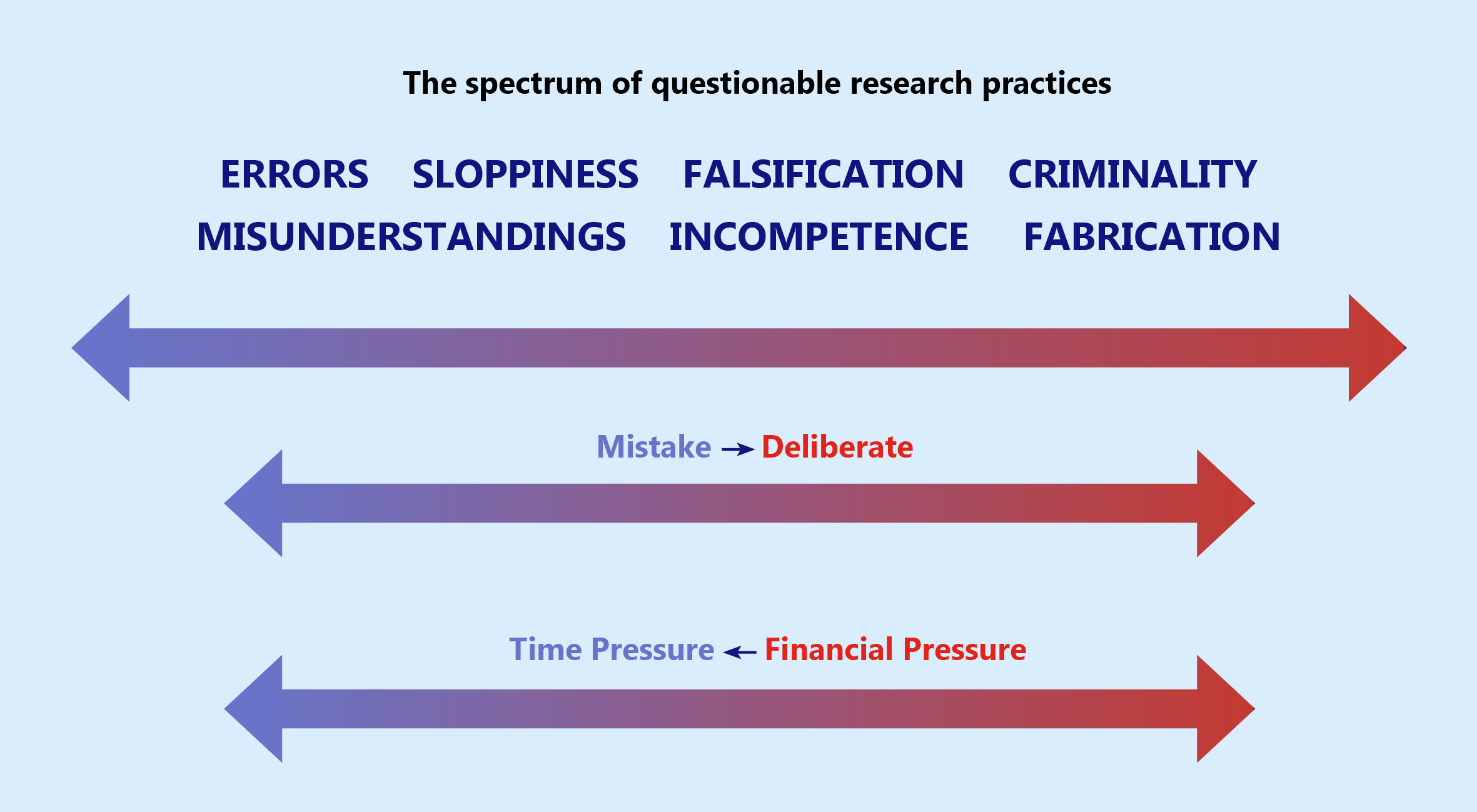
Figure 2: The spectrum of questionable research practices (source: UKRIO)
Figure 2: The spectrum of questionable research practices (source: UKRIO)
By recognizing that QRPs exist on a spectrum, we can determine the best way to address them. If they're a result of sloppiness, misunderstanding, or even incompetence, researchers can look at how to improve research, for example, through:
- Taking time to follow clear methodologies
- Learning how to use rigorous statistical tests
- Following reporting guidelines
- Ensuring data is made open and transparent
- Improving record keeping
Go to the next section of the toolkit, browse all sections below, or download the toolkit as a PDF









 Built with Shorthand