 China
China Africa

Russia's war in Ukraine
Free resources, commentary, and analysis


Like many people around the world, we were shocked and saddened by the Russian invasion of Ukraine in 2022.
These pages bring together journal articles, book chapters, and expert analysis from Taylor & Francis and Routledge authors and editors that can help us make sense of the situation.
As well as the latest research and special journal issues about the war, we look at the background to the crisis and the role of media and disinformation in the conflict. These examine what research could tell us about what might happen next – during the conflict and beyond.


We're also offering free access to selected Handbook of Refugee Health chapters and highlighting how institutions in Ukraine can get free access to academic and professional peer-reviewed content.
Recent insights
8 December 2025
Deterrence, coercion, desecuritization: three lessons from the Russo-Ukrainian war
by Yuliia Kurnyshova in the Journal of Contemporary Central and Eastern Europe


25 September 2025
The Russia–Ukraine war: understanding the Global South's vote at the UN and its implications for the current world order
by Mahama Tawat in Third World Quarterly

12 September 2025
Studying language shift: research on language practices and attitudes in wartime Ukraine
by Volodymyr Kulyk in Post-Soviet Affairs

27 July 2025
When the guns fall silent: the variety of European perspectives on the end of war in Ukraine
by Alexi Gugushvili in the Journal of European Integration


Special journal issues
Resilience, resistance, responsibility: exploring Ukrainian society before and during the war
Innovation: The European Journal of Social Science Research, Volume 38, Issue 1 (2025)


External differentiation: A new trajectory after Brexit and Ukraine?
West European Politics, Volume 48, Issue 5 (2025)


Background and geopolitics
Article
Between Dependence and Integration: Ukraine’s Relations With Russia
by Rilka Dragneva and Kataryna Wolczuk in Europe-Asia Studies


Since it gained independence in 1991, Ukraine's economy has depended heavily on Russia. This article examines Ukraine's response to Russian initiatives and explores how Ukraine aims to extract economic benefits while minimizing its commitments to its eastern neighbor.
Article
Russia and its Allies in Three Strategic Environments
by Nikolai Silaev in Europe-Asia Studies

This article provides a geopolitical analysis of Russian alliance policy in three environments: Russia's immediate post-Soviet neighborhood; more distant regions of the Eurasian continent; and the global stage.
Book
The Russian Invasion of Ukraine: Victims, Perpetrators, Justice, and the Question of Genocide
edited by Diana Dumitru and A. Dirk Moses
Originally published as a special issue of the Journal of Genocide Research, the chapters in this book examine crucial facets of the Russian invasion.


Book chapter
Diasporic Visions of Democracy and Territory
by Jumana Bayeh in Democracy, Diaspora, Territory: Europe and Cross-Border Politics
This chapter explores the complexity of territory within the field of diaspora studies. It emphasizes a modern perspective of diaspora, framed by deterritorialization.


Media and disinformation
Article
Making sense of the news in an authoritarian regime: Russian television viewers' reception of the Russia–Ukraine conflict
by Maxim Alyukov in Europe-Asia Studies
Do citizens in autocracies trust state media? This study uses Russian television viewers’ reception of the Russia–Ukraine conflict to investigate media perception in an autocracy. It argues that citizens in non-democracies lack the opportunities, motivation, and tools to substantively process news.

Article
Presidential elections 2018: The struggle of Putin and Navalny for a media agenda
by Anastasia Kazun and Kseniia Semykina in Problems of Post-Communism
In Russia, the mainstream media is largely influenced by the authorities, while the Internet has more freedom.
This study compared the issue agendas of Vladimir Putin and opposition leader Alexey Navalny across traditional and digital media in the run-up to the 2018 presidential election.

Book chapter
Russia's hybrid aggression against Ukraine
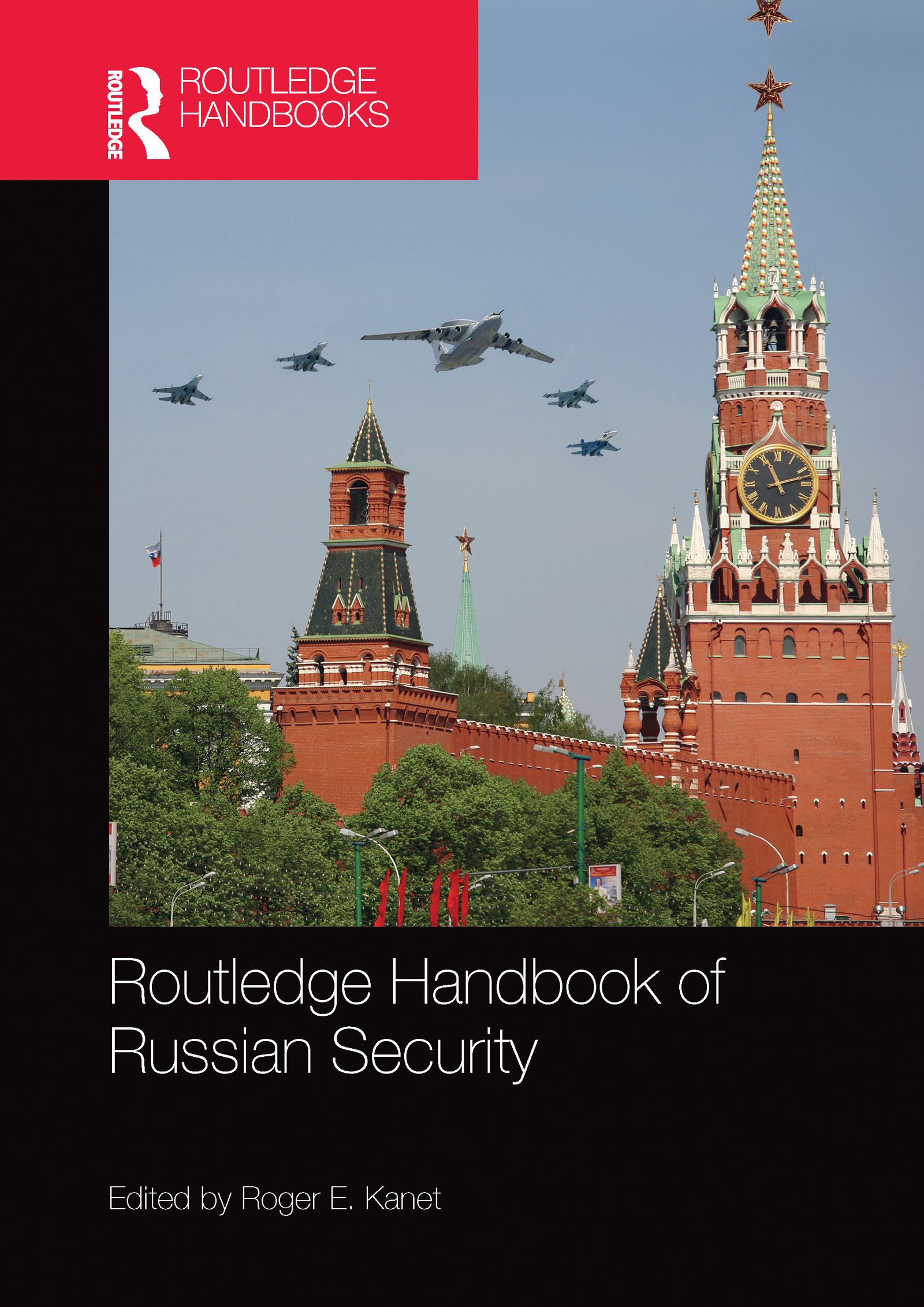
by Yury E. Fedorov in the Routledge Handbook of Russian Security
Disinformation and propaganda campaigns are a common method in 'hybrid warfare' – a term that describes a mix of conventional military operations with non-military methods. This chapter exposes the Russian concept of hybrid warfare. It highlights its strategic goals toward Ukraine and outlines the evolution of its war plans from ‘traditional’ to hybrid operations.

Book chapter
Tactics of Russia's independent media during the war in Ukraine
by Tatiana Chervyakova in Kremlin Media Wars
The Russian international media outlet Russia Today (RT) has been widely accused in the Western world of producing government propaganda and conspiracy theories. This book explores for the first time the role that conspiracy theories actually play in the network’s broadcasts.


Free access to Handbook of Refugee Health chapters
The UN reports that 5 million people – including many children – have left Ukraine seeking safety, protection, and assistance since the invasion. The war has forced many more to move inside the country.
Worldwide, there are at least 117 million people who have been forced to flee their homes.
The conditions refugees experience during their journeys and how they're received at their destinations will determine their health outcomes as well as the health of those living in host communities.
To support health professionals and humanitarians, we're offering free online access to selected Handbook of Refugee Health chapters:
- Part 1, chapter 1 – the global reality: forced migration and health
- Part 2, chapter 1 – health needs assessment in the context of forced displacement
- Part 3, chapter 1 – emergency scenarios
This book provides a framework to identify and approach health needs, from basic elements like service mapping and initial interventions to more complex elements of ongoing healthcare. It also discusses associated areas, including human rights and law, public health, medical anthropology, and cultural awareness.
Find out more about the book on the Routledge website.


How to support Ukrainian research
Free access to academic and professional peer-reviewed content to institutions in Ukraine
Taylor & Francis is one of almost 200 publishers providing free access to academic and professional peer-reviewed content to institutions in Ukraine (and many other countries) through the Research4Life program.
#ScienceForUkraine
This community group highlights support opportunities for graduate students and researchers directly affiliated with an academic institution in Ukraine. You can support by offering help such as temporary accommodation, access to facilities, scholarships and stipends, employment opportunities, and research visits.
SUPRR (Supporting Ukrainian Publishing Resilience and Recovery)
SUPRR's mission is to help strengthen the Ukrainian publishing sector. We support SUPRR initiatives, including the University Press Publishing for Ukraine: Policy, and Practice, Workshops.
This programme aims to equip Ukrainian academic editors, publishers, and policymakers with the skills and knowledge they need to enhance the quality, sustainability, and global integration of Ukrainian scholarly publishing.
 Built with Shorthand